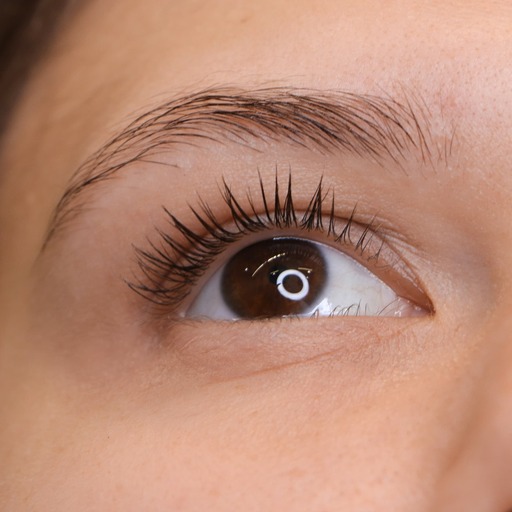
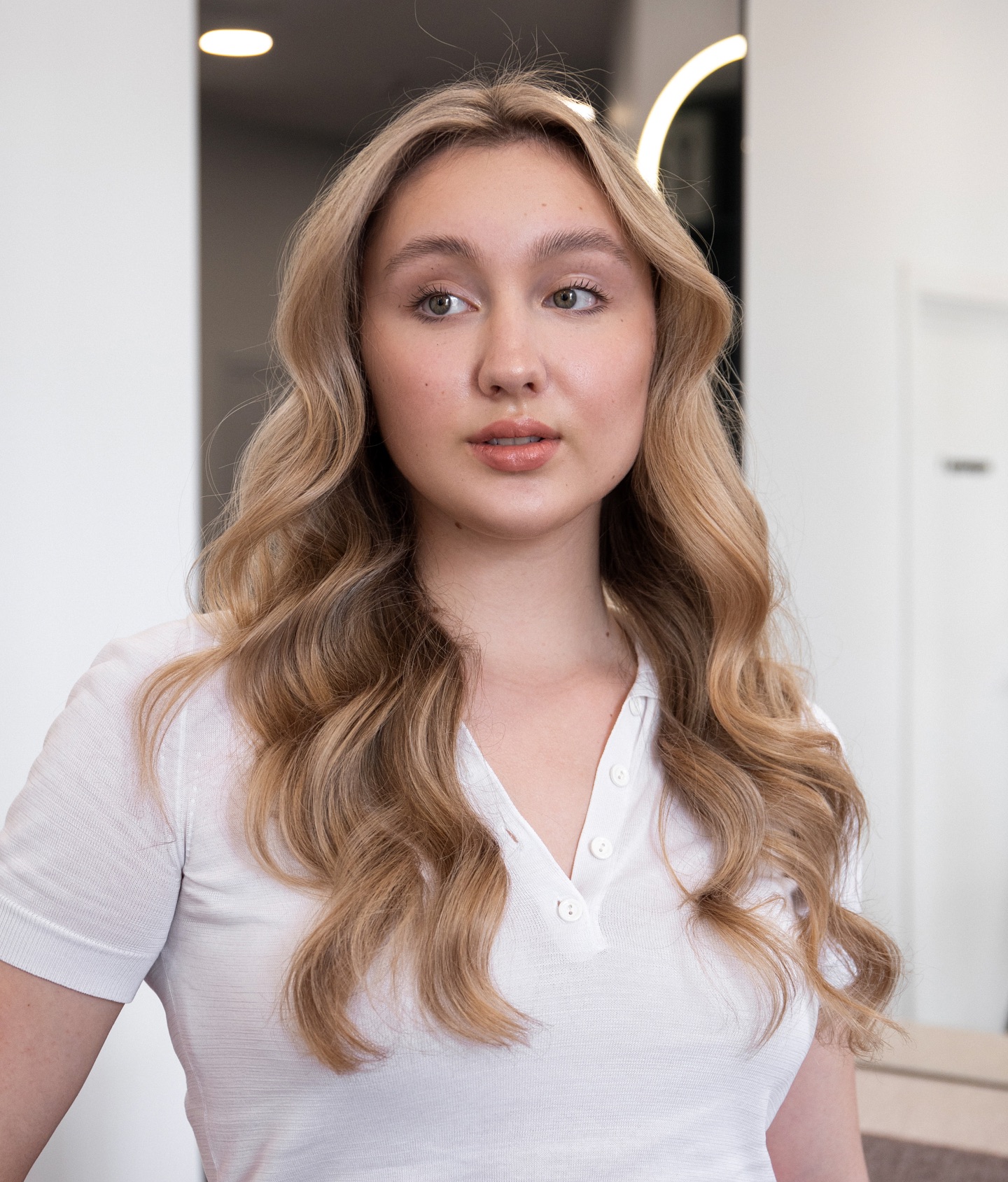
Lash lamination involves temporarily changing the hair’s structure using special products that relax the keratin bonds in the lash, allow it to be shaped around a silicone rod, and then set that shape. Within the same treatment, lashes are also tinted and saturated with nourishing ingredients, so the result isn’t just a curl — it’s also deeper colour and a noticeably fuller-looking lash line. This is a completely different mechanism from eyelash extensions, where extra fibres are glued onto the natural hair. Here, we work exclusively with the client’s own lashes, with no added weight on the eyelid and none of the risks typical of cosmetic glue.
How Lamination Differs From Other Lash Care Methods
The difference compared to classic curling with a lash curler or mascara is simple — there, the effect disappears after washing your face once; here, the curl and colour last for weeks. Lamination works with what your lashes already have naturally. People who’ve previously used eyelash extensions and noticed their own lashes weakening often switch to lamination as a recovery step.
What Products Are Used for Lash Lamination at the Salon
The whole lash lamination process is built on a three-step chemical system, along with supporting materials and products for tinting and deep nourishment. Each product handles one specific stage of working with the hair.
1. First solution. Opens the lash scales and breaks its internal bonds, making the hair soft and flexible enough to take the shape of the silicone rod. For this step, technicians reach for thioglycolic acid or cysteamine — the latter works more gently and often appears in systems marketed as Korean lash lamination.
2. Second solution. Neutralises the effect of the first and rebuilds the hair’s bonds in its new, curled shape. It’s what makes the curl set on the rod last for weeks rather than disappearing after washing your face once. This stage uses sodium bromate or low-concentration hydrogen peroxide.
3. Third solution. Seals the hair’s scales, replenishes moisture levels, and removes any residue from the previous products and glue. This stage uses keratin, hyaluronic acid, panthenol, silk amino acids, and plant oils, such as argan oil.
Alongside the three main solutions, some supporting materials are also used:
- Degreaser — prepares the hair to better absorb the following products.
- Lash lamination glue — attaches the rod to the eyelid and the lashes onto the rod, increasingly in the form of an oil-based balm that doesn’t dry instantly and allows the lash placement to be adjusted during the treatment.
- Thickening powder — added to the glue or solution for very stiff, springy hairs.
For the tinting itself, a soft dye combined with a low-percentage oxidant is used, which saturates the hair with colour from the root to the clear tip. If the client opts for extra strengthening, a concentrated serum with peptides, vitamins A, E, and F, and collagen is applied before or after tinting — it’s this serum that’s responsible for the visible thickening of the hair.
At PIED-DE-POULE salons, we work with certified systems from recognised brands, all of which are based on the same three stages described above.
Who This Treatment Suits Best
Lash lamination works particularly well in a few specific situations.
- Lashes that grow straight down or sideways gain a defined curl without daily use of a lash curler.
- Light tips that have faded in the sun look darker and more defined, from root to tip, after the treatment.
- People with stiff, springy hairs that are hard to keep curled with mascara get a lasting effect without the morning battle with a lash curler.
The treatment is also chosen by women heading on holiday or going to the pool or gym — lashes look well-groomed without needing to apply makeup every day.
Lash Lamination: Results and How Long They Last
The result is visible as soon as the rod is removed — lashes are curled, darker, and visually fuller. This usually lasts around eight weeks, though how fast the effect fades depends on your own lash growth cycle and daily care. After the first cycle, many clients decide to repeat the treatment regularly, since the effect builds with each session — lashes become increasingly nourished and springy.
Anyone looking for something in a different direction, and who’d rather thicken their brows at the same time, often combines the visit with brow lamination, performed at the same salon on the same day.
How Long the Session Takes and What It Includes at PIED-DE-POULE
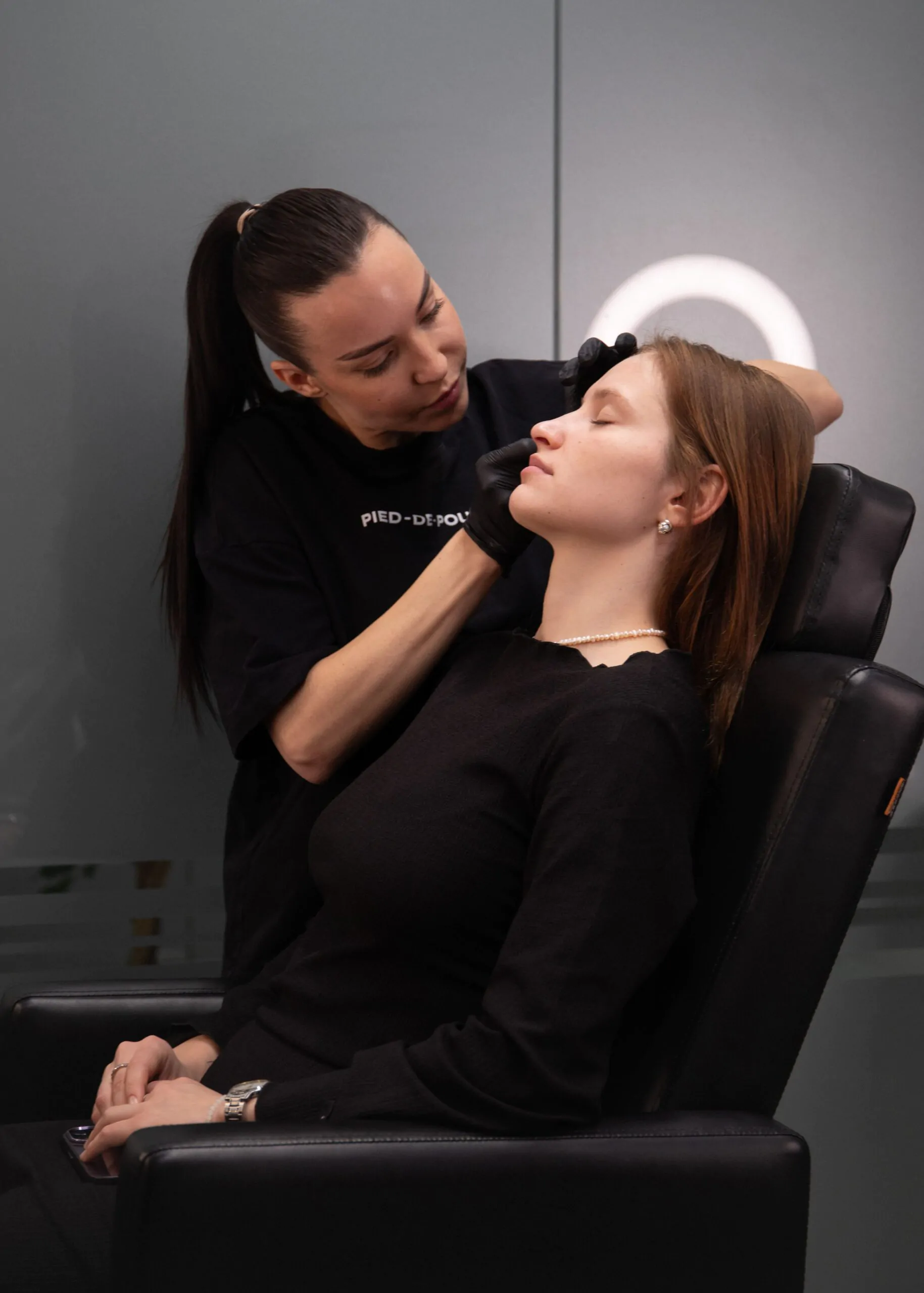
A single session at our salons takes 45 to 75 minutes and includes the full set of steps — choosing the rod size for your eye shape, applying the lifting and setting product, tinting, and a final nourishing treatment with keratin and oils. If a client wants to even out lash colour alone, without changing their curl, lash tinting is an alternative, as a separate, shorter treatment. The recommended repeat schedule is once every six to eight weeks — that way, lashes don’t lose their curl between visits, and the hair’s structure gradually strengthens.